J. C. BURCH - A PERSONAL TRIBUTE
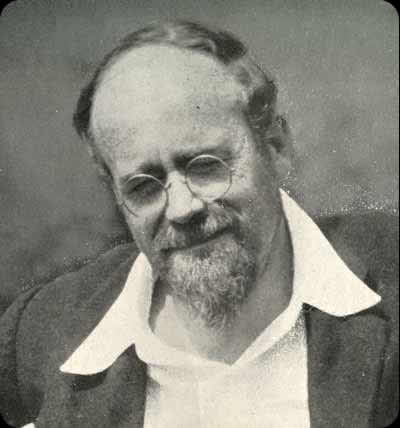 J.
C. Burch was Headmaster of Lydney Grammar School for a mere sixteen years.
When he died the reputation of the school in academic achievement,
in games, in the social arts and the quality of its pupils was as high
as that of any school in the county. It reflected his personality and
stood upon his work. Some details of his endeavours on the school's
behalf are given elsewhere, but they to not reveal the ma. I do not
ask forgiveness for this very personal attempt to revive your memory
of him, if indeed it is necessary to do so. My experience of Headmasters
is not so limited that I cannot dare to say that this one was unique
and those who were at school in his time enjoyed a unique experience.
J.
C. Burch was Headmaster of Lydney Grammar School for a mere sixteen years.
When he died the reputation of the school in academic achievement,
in games, in the social arts and the quality of its pupils was as high
as that of any school in the county. It reflected his personality and
stood upon his work. Some details of his endeavours on the school's
behalf are given elsewhere, but they to not reveal the ma. I do not
ask forgiveness for this very personal attempt to revive your memory
of him, if indeed it is necessary to do so. My experience of Headmasters
is not so limited that I cannot dare to say that this one was unique
and those who were at school in his time enjoyed a unique experience.
I first recognised his personality when I heard him address the assembly on
his first Armistice Day. He was nervous, as he always was when speaking from
the dais on any but a domestic occasion. I did not accept all that he said
but I knew absolutely that here was a man liberal in outlook, generous in spirit
and courageous of heart. In the years that followed, he manifested these qualities
over and over again in matters of moment, in trifles, in his relationships
with pupils and staff. These relationships were the springs of his success
and the source of his power. He knew this and took trouble to foster them while
yielding nothing in principle or aim.
As I write this I see him in every part of the school I remember, as though
he has been gone for a mere summer holiday and not for the twenty-five years
that have passed since he fell in death at my feet in the study.
I see him taking those larger classes in the school hall of which almost everyone
disapproved and which he so wise, persisted in taking. There he would sit on
the edge of a table, like some beneficent Jove, half smiling with eyes bright;
expounding through Shakespeare his philosophy of life - far from the academic
point, but never dull, never trite and always wise. I see him striding down
the corridor to fall upon some miscreant or to reduce to audible silence some
too-exuberant class and anger appeased, turning to suggest to a late-arriving
member of the staff that his class needed some instruction in the art of waiting.
I see him at staff meetings - the most stimulating chairman I have known -
collecting our view, directing us where he would have us go, gaining his point,
or overborne by the weight of numbers or argument relinquishing it with good
temper and philosophical acceptance of our misguided ness. I see him a prefects' meetings
and here he showed a deep respect for the growing mind. He would listen courteously
to representations from senior boys and girls, often half-baked and badly expressed.
He would flay careless thinking, mental and physical laziness or indifference,
yet never as I remember, did he make boy or girl look small before contemporaries
or juniors unless self-esteem had already been thrown away by the individual.
I can vividly see his whole body start back with real or simulated surprise at
the presentation of some heterodox idea, resistance rising in him. The silence,
while he thought a second time, out of respect for another mind. He would retire
for further consideration and return in a few moments (or after a quite long
delay) to pursue his own was with new arguments and fresh vigour or to withdraw
graciously and adopt his opponent's view with enthusiasm. He had strong
prejudices, but they were based upon high thinking and wise concept and often
he could not be moved, no matter what inconvenience or disappointment he suffered.
He was adept at out-talking most of us, but few of us resented his skill and
were often thankful on reflection that J.C.B. had won the day.
There were those, of course, whom he could not out-talk or our-reason without
bitter engagement and unceasing challenge. He had to move mountains of opposition
to some of his boldest and wisest plans and in the process he caused pain to
some or earned sharp disapproval from others. He met his defeats with courage,
acknowledged his mistakes with generosity and succeeded by his personal charm
and transparent integrity, often against the odds, in making friends of most
of his foes.
In spite of the demands of this high-powered school philosophy, J.C.B. found
time to relax with his colleagues and these moments provide me with some engaging
memories of times past. I see him playing bridge in our common-room after lunch,
often brilliantly but with a contempt for orthodoxy that sometimes bewildered
his partners. I see him telling some school anecdote with as much glee as a schoolboy,
and his youth, so often concealed behind a pensive, even austere gaze, flashing
forth in gaiety and infectious laughter. I see him naughtily enjoying a piece
of school gossip or listening with deep pleasure and pride to some report of
prowess on the school field. I see him undaunted but somber in the war years,
sparing neither himself nor anyone else in the pursuit of his and our duty and
finally, I see him on his last visit to the school. He was dying but gave no
hint of it. He asked about this and that, dictated a letter, gave me some advice
about current problems, and said"I feel on top of the world to be back" and
died.
One of the letters I later received in which attempts were made adequately to
praise this Headmaster end with the words"O si sic omnes". What
more is there to say.
Alice Higgs
If you wish to comment on this page please click this link:
COMMENTS .
The Comments page will open in a new Tab to allow you to easily switch between this page and the comments page.
WANTED: Old photos, old postcards, ephemera and memories of the Forest of Dean, Gloucestershire. U.K.- please click the COMMENTS Link above to make contact.